Can You Do the Cliffs of Moher and Aran Islands in One Day?
Yes, and it is one of the most popular ways to see the west coast. Here is how a combined Cliffs of Moher and Aran Islands day works by boat, which trips to book, and who should skip the long day.
 By Niamh O'Connor, Cliffs of Moher & Doolin boat-cruise specialist
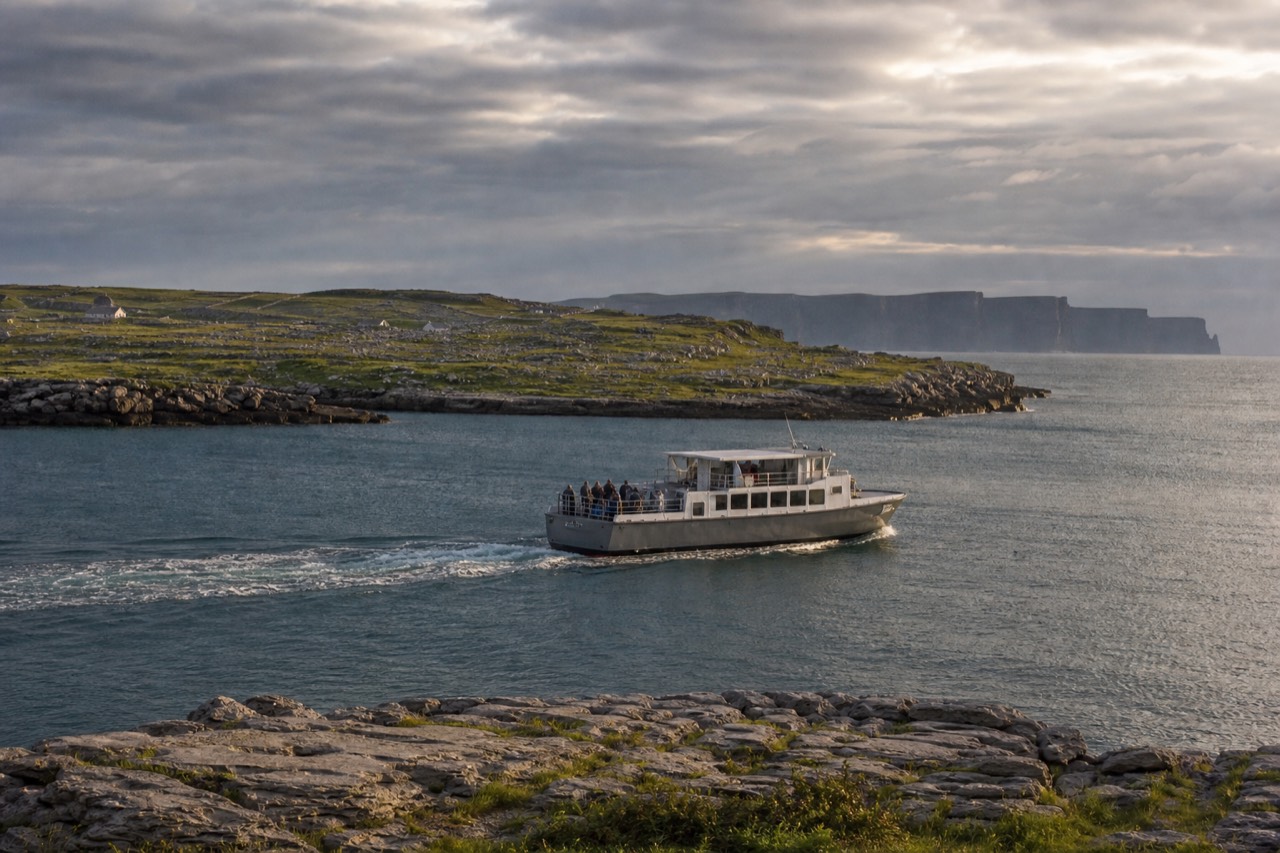
Two of the west coast's headline sights sit within sight of each other across the mouth of Galway Bay, and a lot of visitors want both in the time they have. The good news is that the Cliffs of Moher and the Aran Islands pair up naturally, because the same boats that carry you to the islands pass the base of the cliffs on the way. The catch is the clock. A combined day is long, sometimes very long, and the version you book decides how much of the cliffs you actually get.
There is a geography point worth clearing up before anything else, because it trips people up constantly. The Cliffs of Moher are on the mainland, on the County Clare coast near Doolin. The Aran Islands are a separate group out in the bay. You do not stand on Aran and look up at the Cliffs of Moher; you see the cliffs from the water as your boat runs between the islands and the coast. Once that is straight, planning a day around both gets a lot easier.
Can you really see both the Cliffs of Moher and the Aran Islands in one day?
Yes, and it is one of the most popular ways to see this coast. Combined trips run from Galway and from Doolin, using a boat to view the cliffs from sea level and a ferry to land on an Aran island. Expect a full day of eight to eleven hours depending on the version, with coach time on the Galway options. It works, but it is not a short outing.
The reason it fits into one day is that everything is close together on the map, even if the day feels big. From Doolin, the ferry to the nearest Aran island is a fifteen-minute crossing, and the cliff cruise leg runs on the same boat. From Galway, a coach carries you down to the coast or a ferry sails straight out to the islands, with the cliffs viewed from the sea. None of it requires an overnight, which is exactly why the combined day sells so well.
What it does require is stamina and an early start. These are not trips where you drift in at eleven and stroll home by three. The Galway departures leave in the morning and get you back in the evening, and the payoff is that you tick two major sights off in a single, well-organised day rather than spreading them across two.
How does a Cliffs and Aran day actually work?
Most combined days follow the same rhythm: travel to the coast or the docks, cross to an Aran island, spend a few hours exploring by bike, foot or pony trap, then take a boat that passes the Cliffs of Moher from the water on the way back. The Galway versions add a coach leg; the Doolin version keeps you on one boat for both the island and the cliffs.
The Doolin route is the tidiest. You board the ferry at Doolin Pier, cross to Inis Oírr in about fifteen minutes, explore the island for as long as your chosen return sailing allows, then stay aboard the return boat for a dedicated cliff cruise beneath the wall. The operator, the Doolin Ferry Company, describes the combined ticket as its best-value and most popular option precisely because one boat does both jobs and you never have to change vessels for the cruise portion.
The Galway routes trade that neatness for a bigger day and a single pickup in the city. A morning coach or a direct ferry takes you out, the island time is built into the schedule, and the cliffs come into view from the sea on the return. Our guide to combining the cliffs and Aran Islands by boat lays out the mechanics of each in more detail, but the shape is always the same: island first, cliffs from the water, home in the evening.
One detail that catches people out is when the cliffs actually appear. On the combined days the cliff cruise or pass usually comes toward the end, on the way back rather than the way out, so the big finish is the cliffs from the water after a full day on the island. Build your energy and your camera battery around that, because tired legs and a dead phone at hour nine are a common regret on these long outings.
Which one-day combinations can you book?
Four main combined trips cover the ground: two full-day tours from Galway that pair a coach, a ferry and the cliff cruise, a Galway ferry-and-cruise day that skips the coach, and the Doolin ferry-plus-cliff-cruise combo. Prices run from around €60 to €84, durations from about 8.5 to 10.5 hours, and the amount of dedicated cliff time varies a lot between them.
The table sets the real options side by side. Prices localise to where you book from and shift with the season, so treat them as a planning guide and check the live listing for your date. Ratings shown are the ones our two research reads agreed on; where a listing's star rating could not be confirmed, only the review count is given.
| Trip | Base | From price | Day length | Rating / reviews |
|---|---|---|---|---|
| Galway to Aran and Cliffs day tour and cruise | Galway | From about €84 | ~10 h | 4.8 / 2,672 |
| Galway Aran and Cliffs tour and cruise | Galway | From about €78 | ~10.5 h | 4.8 / ~3,662, likely to sell out |
| Galway Aran ferry and Cliffs boat tour | Galway | From about €60 | ~8.5 h | 4.6 / 1,932 |
| Inis Oírr and Cliffs cruise from Doolin | Doolin | Check the listing | ~1–5 h | 64 reviews on the listing |
The spread tells a story. The Doolin combo is the shortest and most flexible, because you set your own island time and the cliffs are a dedicated cruise rather than a passing glance. The Galway day tours are the fullest, folding coach transfers, island time and the cliffs into one guided package, which is why they carry the biggest review counts. The Galway ferry option is the cheapest and skips the coach, but as we will get to, its cliff view is the briefest of the lot.
Is it better to start from Galway or from Doolin?
Base yourself in Galway if you have no car and want a guided day with everything handled from a city pickup. Base yourself at Doolin if you want the best and longest cliff view, more control over your island time, and a shorter day overall. Galway suits first-timers without transport; Doolin suits people who care most about the cliffs from the water.
Galway is the default for a reason. It is a city with hotels, buses and trains, and the combined day tours collect you there and return you there, so you never touch a steering wheel. If you are staying in Galway and the point is to see a lot in one organised day, the coach-and-cruise combinations do exactly that, and the Galway day trip options are the biggest-demand route on this coast. Reaching the cliffs without a car is a common worry, and our piece on getting to the cliffs from Galway without a car covers the transport in full.
Doolin flips the priorities. It is a small village right beside the cliffs, so there is no long coach leg, and the ferry to Inis Oírr plus the cliff cruise is a compact, boat-only day. The dedicated cruise gives you the fullest time under the wall. The downside is that you need to get yourself to Doolin first, which without a car means a bus connection. If the cliffs from sea level are the whole reason you are here, though, Doolin is the stronger base.
Cost tilts the choice too. The Galway coach-and-cruise packages bundle a lot into one price, which feels efficient but runs higher, while the Doolin ferry-plus-cruise can work out cheaper if you already have your own way to the village. Weigh the coach fare you are effectively paying for against the freedom of driving yourself to Doolin and booking the boat alone, then pick the base that fits how you are getting around Clare in the first place.
Which Aran island will you land on?
It depends on the trip. Doolin combos land on Inis Oírr, the smallest and closest island, a short fifteen-minute crossing. Most Galway ferry days go to Inis Mór, the largest island and home to the Dún Aonghasa cliff fort, a longer sail. Inis Oírr suits a compact combined day; Inis Mór rewards those who want more time and a bigger island to explore.
Inis Oírr, or Inisheer, is the little one facing the Clare coast. It is easy to see on foot or by rented bike in a couple of hours, with a beach, a shipwreck, a ruined castle and stone-walled lanes. Because the crossing from Doolin is so short, it pairs neatly with the cliff cruise into a single boat day, which is why the Doolin combo lands there.
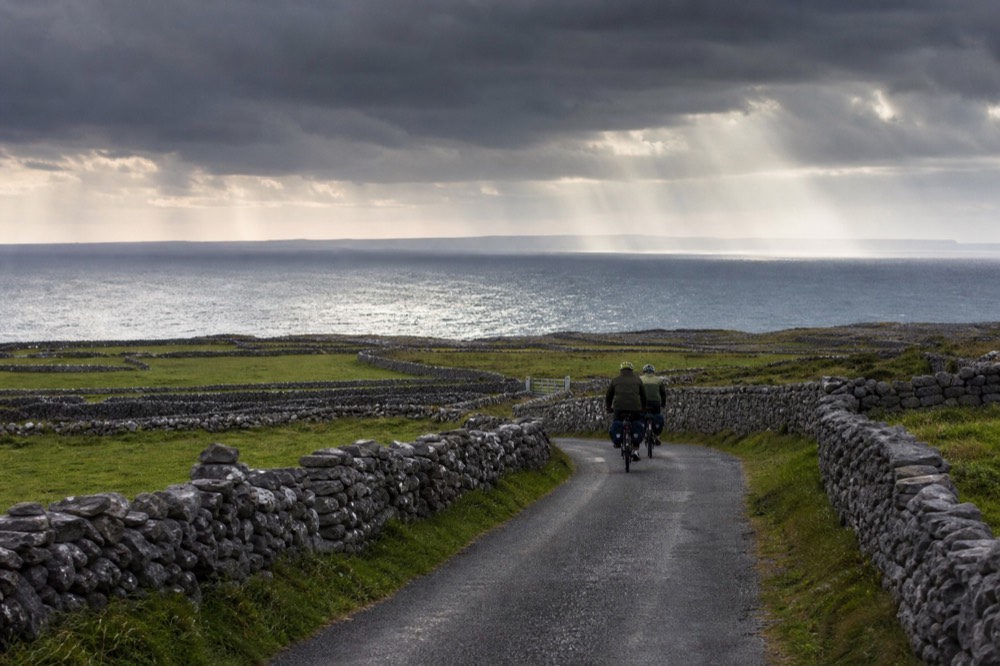
On either island you get around the same handful of ways: rented bikes waiting by the pier, pony-and-trap rides for hire, or your own two feet. Inis Oírr is small enough to loop in a couple of hours, while Inis Mór needs a bike, a minibus tour or a very brisk walk to reach Dún Aonghasa and back inside the ferry window. Whichever island your trip lands on, budget your time against the return sailing, because missing it means an unplanned night on Aran.
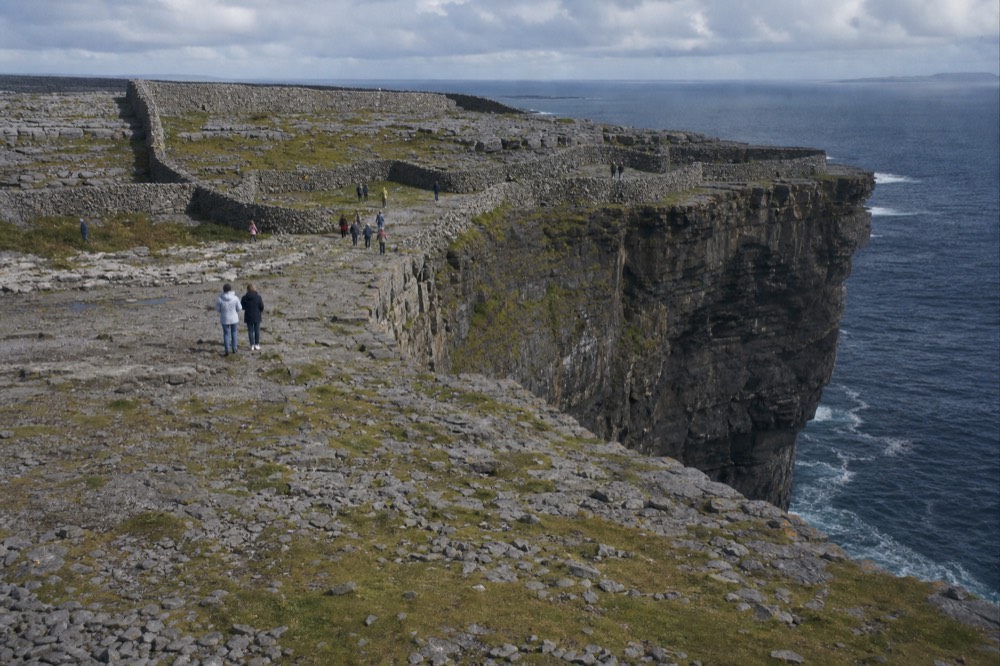
Inis Mór is the headline island: bigger, wilder, and crowned by Dún Aonghasa, a prehistoric fort perched on its own hundred-metre sea cliffs. Those island cliffs, confusingly, are not the Cliffs of Moher, which sit back on the mainland. If your Galway ferry heads to Inis Mór, you get a full island to roam, but you will want the hours the schedule gives you. The reason the two places get muddled so often is the subject of our piece on whether the Cliffs of Moher are on the Aran Islands, and the short answer is no.
How much time do you actually get under the cliffs?
This is where the trips split sharply. A dedicated cliff cruise, whether from Doolin or built into a combined day, runs 45 minutes to an hour right beneath the 214-metre wall. A plain Aran ferry from Galway only passes the cliffs briefly on the return leg, around fifteen minutes and often further out. If the cliffs from the sea are your priority, book a trip with a dedicated cruise leg.
The difference is bigger than the numbers suggest. A dedicated cruise slows at the sea stack, lingers by the sea caves and the seabird colonies, and gives you real time to take in the scale, according to what the official cliffs visitor centre and the operators describe. A ferry pass is a drive-by: the cliffs slide past on one side while the boat holds its course for the harbour, and on a hazy day you may get little more than a grey outline. Our guide to what you see on a cliff cruise walks through the features a proper cruise takes in, point by point.
So the honest planning rule is simple. If you just want to say you glimpsed the cliffs from the water on your way to Aran, the cheaper ferry day does that. If you want the cliffs to be a real part of the day rather than a footnote, pick a combination that runs a dedicated cruise. The Galway ferry-and-cruise option is the one to scrutinise here, because its cliff time is the shortest of the combined trips. For which boat gives the most time under the wall, our guide to the ferry that shows the cliffs best ranks them.
The practical test is to read the itinerary for the word "cruise" rather than "ferry" or "view from the boat." A listing that promises a cliff cruise commits to time spent beneath the wall, while one that only mentions seeing the cliffs on the crossing is describing a pass. That single word is the clearest signal of how much cliff you are actually buying, so it pays to read the fine print before you compare prices.
Is the long day worth it, and who should skip it?
For most travellers with a full day to spare, yes. Two major sights in one well-run outing, with the cliffs seen from an angle no clifftop path offers, is a strong use of a day. Skip it if you tire on long trips, if you get badly seasick and cannot pick a calm day, or if you would rather give the cliffs and the islands unhurried time on separate days.
The combined day is at its best for a visitor on a tight itinerary who wants breadth. You cover a lot, someone else handles the logistics on the Galway versions, and the sea-level cliffs are the memorable part almost everyone mentions afterwards. If your schedule only has one free day for the west coast, this is how you get the most out of it. You can check the current price and departure times for the full-day tour, or compare the price and availability of the sell-out Galway alternative before you commit.
The day is not for everyone, though. It is genuinely long, weather can cancel the boat portion, and cramming both sights into one push means neither gets a slow, lingering visit. If you have two days and prefer depth to breadth, splitting them is the calmer plan. And if seasickness is a worry, remember the water is the whole point of the trip, so read our honest take on how rough the cliff crossing gets first. Whatever you choose, Cliffs of Moher Cruises lays the real options out so the day matches what you actually want from it.
There is a middle path worth flagging for anyone torn on the long day. You can take the cliffs and the islands as two separate outings from a base like Galway or Doolin, giving each the unhurried time a single combined push cannot. It costs an extra day, but it turns two rushed highlights into two proper visits, and it removes the risk of a cancelled boat wiping out your only shot at the cliffs. For a tight schedule the one-day combo still wins; for a relaxed one, splitting them often reads better in hindsight.
Frequently asked questions
Can you visit the Cliffs of Moher and Aran Islands in the same day?
Yes. Combined trips run from Galway and from Doolin, landing you on an Aran island and passing the Cliffs of Moher from the water in one outing. Expect a full day of roughly 8.5 to 11 hours depending on the version. The Galway tours add a coach leg, while the Doolin combo keeps you on one boat for both the island and the cliffs.
Which Aran island do you visit with the Cliffs of Moher?
It varies by trip. Doolin combined tickets land on Inis Oírr, the smallest and nearest island, a fifteen-minute crossing that pairs neatly with the cliff cruise. Many Galway ferry days go to Inis Mór, the largest island and home to the Dún Aonghasa cliff fort. Check the specific listing, since the island and the amount of free time differ between operators.
Do combined trips include a proper cliff cruise or just a ferry pass?
Both types exist, so check before booking. A dedicated cliff cruise runs 45 minutes to an hour beneath the 214-metre wall, slowing at the sea stack and caves. A plain Aran ferry only passes the cliffs briefly on the return leg, around fifteen minutes and often further out. If the cliffs from the sea are your priority, pick a trip with a dedicated cruise leg.
Is it better to do the combined day from Galway or Doolin?
Galway suits visitors without a car who want a guided day handled from a city pickup, with coach transfers included. Doolin suits those who want the longest, best cliff view and more control over island time, on a shorter boat-only day, but you must get yourself to Doolin first. Choose Galway for convenience, Doolin for the cliffs themselves.
How long is a Cliffs of Moher and Aran Islands day trip?
The Galway day tours run about 8.5 to 10.5 hours door to door, including coach time, the ferry crossing, island exploration and the cliff cruise or pass. The Doolin ferry-plus-cruise combo is shorter and more flexible, since you set your own island time around the sailing you choose. Either way, plan on an early start and an evening return.
Is a combined Cliffs and Aran Islands tour good value?
For a full day it usually is, since one booking covers transport, an island landing and the cliffs from the water. The Galway day tours run from about €78 to €84, and the cheaper Galway ferry option from around €60. Value hinges on the cliff time you get, so check whether the trip includes a dedicated cruise or only a brief ferry pass before you judge the price.